Forex Demo Account: What It Is and How to Use It
What a forex demo account simulates, how long to practice, and which brokers offer the longest demo access.
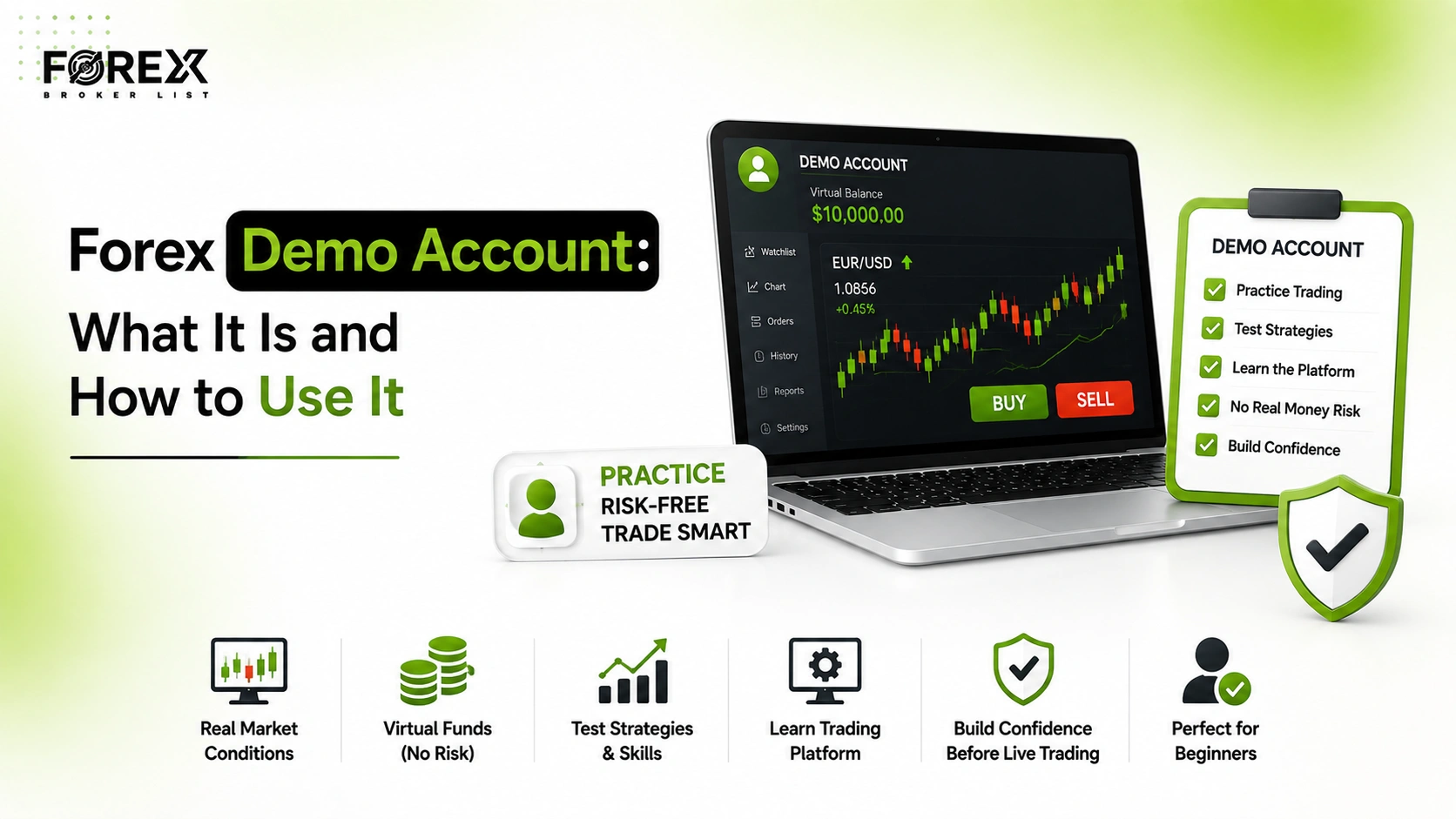
A forex demo account is a practice trading account that uses virtual funds instead of real money, connected to live or near-live market prices. It lets beginners learn how a trading platform works, test strategies, and understand order execution before risking actual capital.
Key Takeaways
- Demo accounts use virtual money but reflect real-time or near-real-time market prices and spreads
- Most brokers restrict demo access to 30, 60, or 90 days, though some offer unlimited access on proprietary platforms
- A demo account cannot replicate the psychological pressure of trading with real money, which is its biggest limitation
- Most experienced traders recommend at least 50 to 100 practice trades, or several weeks of consistent use, before going live
- Practicing with a virtual balance close to your intended real deposit gives the most realistic preparation
What a Forex Demo Account Actually Simulates
A demo account connects to the same or nearly the same live price feed the broker uses for real accounts, so the currency pairs, spreads, and charts you see reflect actual market movement. What it does not simulate is the real capital behind the trade. You place orders, set stop-losses, and manage positions exactly as you would live, but any profit or loss is virtual.
Most brokers deliver this through the same platforms used for live trading, typically MetaTrader 4, MetaTrader 5, or a proprietary web and mobile platform, so the interface you learn on a demo account is the same one you will use once you switch to a funded account. You can compare demo account availability and terms across our full forex broker directory before choosing one to practice with.
A demo account is most useful for the mechanical and structural side of trading, the parts that do not depend on emotional pressure. This includes learning how to place market, limit, and stop-loss orders correctly, understanding how leverage and margin affect your account in real time, getting familiar with a specific platform's charting tools and indicators, and testing whether a trading strategy behaves as expected across different market conditions.
It is less useful for learning how you personally react to losing real money, which is why demo performance and live performance often diverge even when the exact same strategy is used in both.
How Long Should You Practice on a Demo Account?
There is no single fixed answer, and the honest range across the industry is wide. Some brokers recommend placing at least 50 practice trades before switching to a live account, treating that as a rough threshold for basic order-placement fluency. Other sources suggest a time-based approach instead, recommending several weeks to a few months of consistent demo trading, depending on how much time you can dedicate daily.
A more useful way to think about it than a fixed number is readiness across three areas: can you place and manage trades without hesitating over the platform mechanics, has your strategy shown consistent results across at least a few different market conditions rather than one lucky stretch, and do you understand exactly how much you could lose on a single trade at your intended position size. Once all three are comfortable, the exact trade count or week count matters less.
Demo Account Duration and Balance by Broker - Comparison Table
Demo account terms vary meaningfully by broker and by platform, so checking the specific terms before you start matters.
| Broker/Platform | Demo Duration | Typical Virtual Balance | Platform |
|---|---|---|---|
| Forex.com | 90 days (proprietary platform) | Customizable | Proprietary web/mobile |
| Forex.com (MT4) | 30 days, resets if trades stay open | Customizable | MetaTrader 4 |
| IC Markets | Unlimited | Customizable, commonly $100,000 | MT4, MT5, cTrader |
| XTB | Unlimited | $0-100,000 range, customizable | xStation, MT4 |
| AvaTrade | 21 days | $100,000 default | MT4, MT5, AvaTradeGO |
Data sourced from broker official demo account pages. Demo terms change periodically, so confirm current duration and reset policy directly with the broker before relying on it for extended practice.
Demo Trading vs Live Trading: What's Actually Different
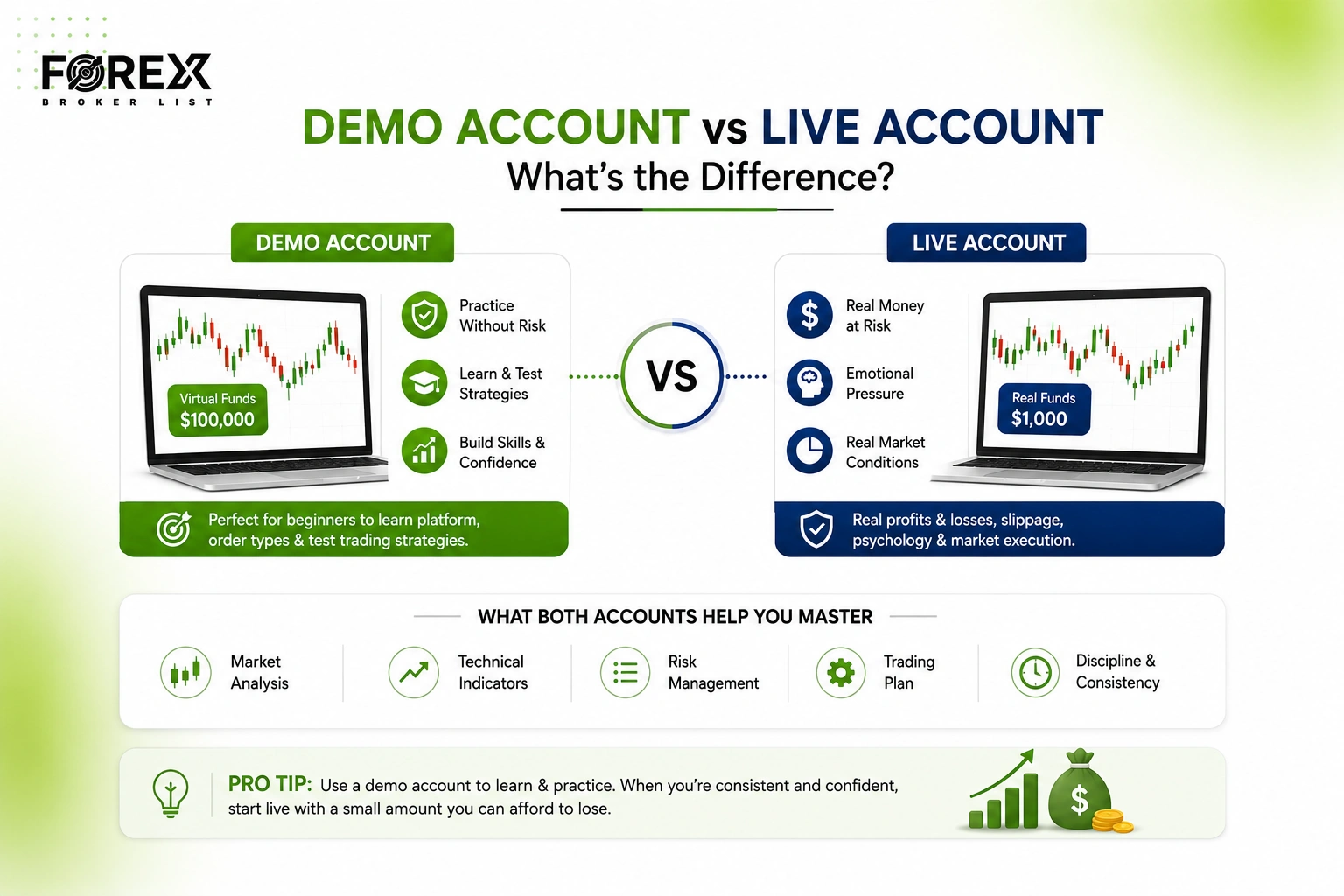
The biggest gap between demo and live trading is not the platform, it is psychology and market microstructure. A demo account cannot replicate the emotional weight of watching real money move, which means demo traders often hold losing positions longer or exit winning ones too early once real capital is involved, even using an identical strategy.
There are also smaller technical differences. Demo execution can be marginally faster or cleaner than live execution, since demo orders are not always competing with other real orders for fill priority during high volatility. Slippage on demo accounts, if simulated at all, rarely matches the slippage seen during genuine live market stress, such as around major news releases.
Signs You're Ready to Move to a Live Account
- You can execute your planned entries, stop-losses, and take-profits without needing to think through the platform mechanics
- Your strategy has produced consistent results across at least a few weeks or a meaningful number of trades, not just one strong session
- You know your exact maximum loss per trade before you place it, based on your position size and stop-loss distance
- You have decided on a starting deposit you are fully prepared to lose without it affecting your finances
- You have chosen and verified the regulatory status of the broker you plan to trade live with.
Conclusion
A forex demo account is genuinely useful for what it is built to teach: platform mechanics, order types, and whether a strategy holds up across different market conditions. It cannot teach you how you personally handle the psychological pressure of real money, which is why the transition to live trading should be treated as a separate, deliberate step rather than an automatic one once a demo account looks profitable. Practice with a virtual balance close to what you intend to deposit, track your results honestly across a meaningful stretch of time or trades, and confirm your chosen broker's regulatory status before funding a live account.
Disclaimer: This article is for informational and educational purposes only. It does not constitute financial or investment advice. Forex and CFD trading involves significant risk of loss and is not suitable for all investors. Demo account performance does not guarantee similar results in live trading conditions.
 Your brand here